A WhatsApp assistant is not a chatbot: the automation SMEs actually keep using
Why most SMEs abandon their chatbot within a month
We are regularly brought in to replace failed chatbot projects. The pattern repeats: a business installs a WhatsApp bot that answers a fixed set of questions with a fixed set of replies, customers quickly learn to type past it to reach a human, and within a month staff are handling the usual message volume plus a layer of customers who got frustrated trying the bot first. Calling the result an assistant does not change what it is.
The decision that actually matters: when to hand off
The difference between an assistant SMEs keep using and one they quietly abandon is not how natural the language sounds. It is how well it knows when to stop answering and hand the conversation to a person. We build handoff around explicit triggers, not a vague confidence guess: a customer asking for something outside the assistant's defined scope, a customer repeating a question because a previous answer did not resolve it, an order or account state the assistant is not authorized to change, or the customer simply typing that they want to speak to someone. The handoff carries the full conversation history to staff, so the customer never repeats themselves.
What we actually automate
- Order status lookups: connected directly to the business's order and inventory system, returning a real answer, not a canned one.
- Frequent, low-stakes questions: hours, location, return policy, delivery zones.
- Document and invoice generation: triggered by a conversation but executed as a background workflow, not typed out by the assistant.
- A complaint, a refund decision, or a customer who sounds upset: routed to a person immediately, not attempted by the assistant first.
Where n8n fits
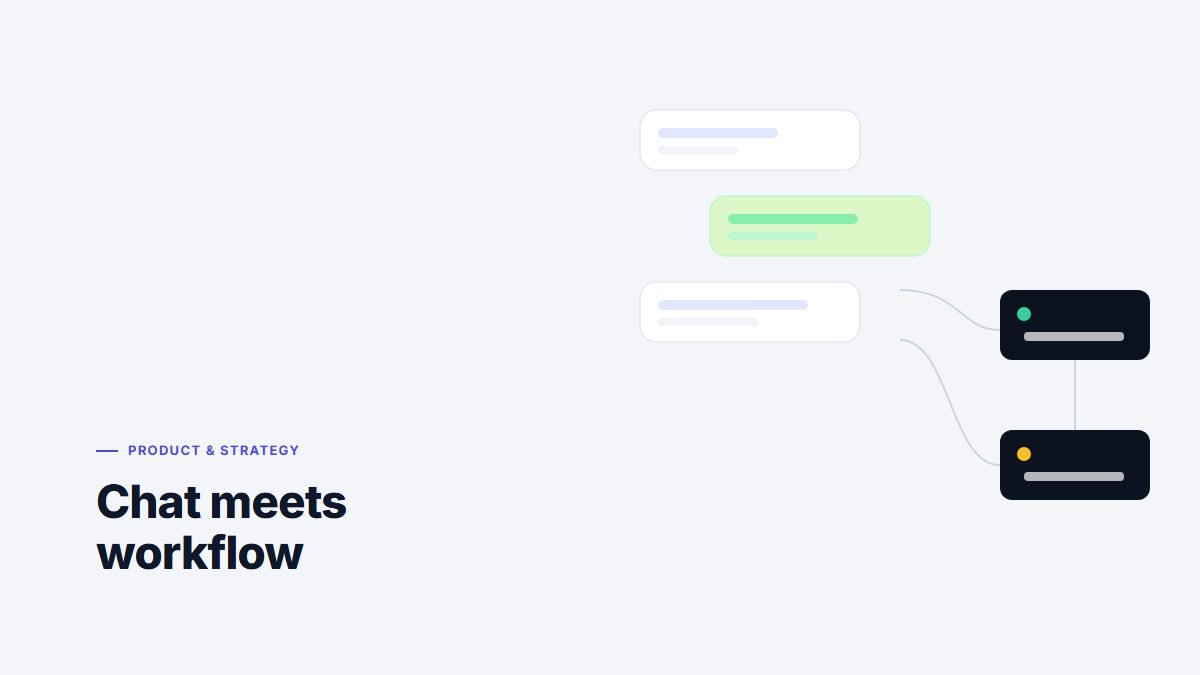
The WhatsApp conversation is the interface, not the automation. When a customer asks for an order status, the assistant does not guess or make up an answer. It triggers an n8n workflow that queries the business's order system and returns a structured result, which the assistant then phrases back to the customer. The same pattern handles invoice generation and document requests: the conversation captures the request and the required details, and an n8n workflow does the actual document assembly and delivery. This separation matters because the business can change what the workflow does, add a new document type, swap a data source, without touching the conversational layer at all.
What SMEs actually need from this
A small or mid-sized business does not need an assistant that can discuss anything. It needs one that reliably handles the handful of conversation types that make up most of its incoming volume, and gets out of the way immediately for everything else. Businesses keep using an assistant they trust to know its own limits, and abandon one that occasionally gives a wrong answer with confidence, because the second failure costs more customer trust than the first costs staff time.
Tuning the triggers after launch
The first set of handoff triggers is always a guess based on how the business expects customers to write, and real conversations do not match that guess exactly. We review a sample of handed-off conversations in the first weeks after launch, and when we see customers reaching a person for something the assistant could have handled, or the reverse, we adjust the trigger list, not the model's tone.
Our recommendation
Do not measure a WhatsApp assistant by how many questions it can answer. Measure it by how accurately it recognizes the moment it should stop, and how cleanly it hands that moment to a person with full context. Build the automated part narrow, not broad, and connect it to real business systems. Let a workflow engine like n8n do the structured work behind the conversation instead of asking the assistant to improvise it.